Donate BattleSHOP Get Tickets Membership

Annual Fund Donation

Support Our Nation's Most Decorated Battleship!

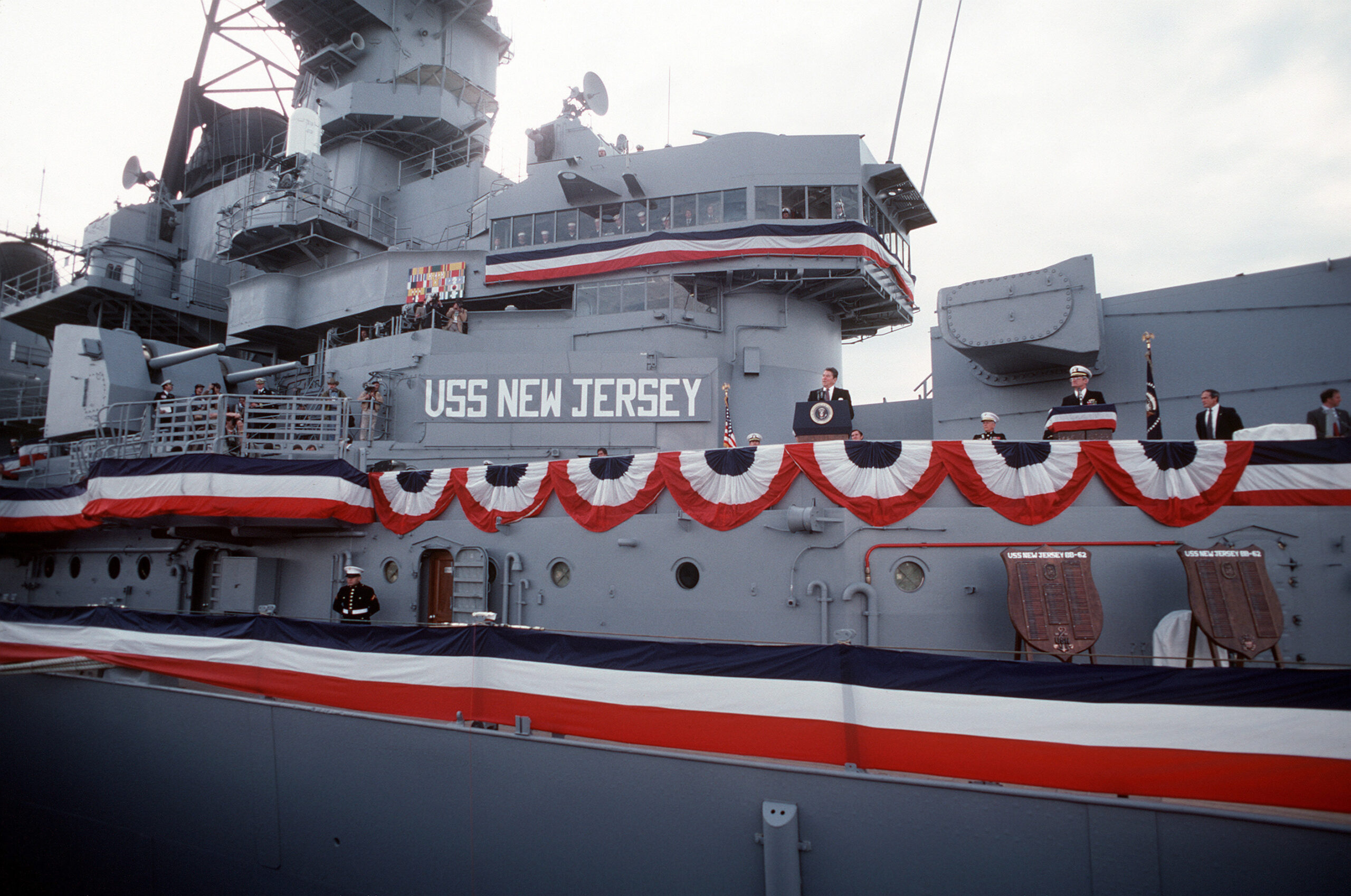
The Battleship New Jersey is the name of what we do business under.  The actual name of our organization is the Home Port Alliance for the USS New Jersey, Inc.  Although the state of New Jersey does support the Battleship, the non-profit museum relies on tours, overnights, rental events and, of course, the support from people like you.

Our Employer Identification number is 22-3604324

Your gift to the Battleship should qualify as a charitable deduction for federal income tax purposes. Please consult with your tax adviser or the IRS to determine whether a contribution is deductible.


How To Donate

You can pay with a credit card online by clicking below. You will receive a letter from the Battleship acknowledging your gift for tax purposes.

Other Ways To Donate
  • Over the phone: (856) 966-1652, Extension 127
  • You can also mail a donation check to:
    Battleship New Jersey
    62 Battleship Pl., Camden, NJ 08103

The Battleship New Jersey Museum and Memorial is a 501(c)(3) charitable organization. Information filed, under the name Home Port Alliance for the USS New Jersey, Inc., with the New Jersey Division of Consumer Affairs, Charities Registration Unit concerning charitable solicitation may be obtained from the Unit by calling (973) 504-6215. Registration with the Charitable Registration Unit does not imply endorsement.

Charitable Gifting, RMDs and QCDs
Many “Friends of the Battleship” have charitable intent and want to help financially support this historic warship for posterity.

If you own an IRA, the IRS mandates that you must take a Required Minimum Distribution (RMD) each year.

Are you aware that you can designate a portion of your RMD to the Battleship New Jersey in the form of a Qualified Charitable Contribution (QCD)?  Here are the specifics on how it works, and the many advantages to the taxpayer:

Using your RMD as a charitable contribution will exclude that amount from your adjusted-gross income (AGI) for the year, which means that in addition to reducing your income taxes, it also can decrease the amount of Social Security that is subject to tax and potentially lower your Medicare premiums.

Also, Roth IRAs do not require withdrawals until after the death of the owner. Designated Roth accounts in a 401(k) or 403(b) plan are subject to the RMD rules for 2022 and 2023. However, for 2024 and later years, RMDs are no longer required from designated Roth accounts.

If this sounds like a strategy that could work for you here are
Some things you need to know:
  • Each person can donate the full amount of his or her RMD, up to a maximum of $100,000 annually. If you are a married couple filing jointly and you each have your own IRA, you both can use the $100,000 QCD rule.
  • You should work with your IRA custodian to correctly accomplish a QCD. Be careful not to withdraw the funds or deposit the RMD into your personal account and then write a personal check. The funds must be made payable directly from the IRA to the charity. (Some IRA custodians mail the check to the IRA owner; if that is the case for you, simply give the check to the charity.)
  • Be sure to inform your tax preparer that you did a QCD. Your IRA custodian will send you a 1099 showing that the distribution occurred, but the amount may not be clearly identified as a QCD. Be sure the QCD is correctly listed on your tax return or you will lose the tax break.
  • It is permissible to use less than the full RMD for the charitable distribution. So, for example, if you have an RMD of $6,000 and you want to give only $4,000 to charity, you still will need to withdraw the remaining $2,000 and pay taxes on it. (Taking the incorrect amount for your RMD could result in a hefty penalty.)
  • You can make a QCD that exceeds your RMD for a given year. However, that extra distribution cannot be carried over to meet the RMDs for future years.
  • You can distribute the money to multiple charities if you choose. The $100,000 per person limit applies to the sum of all QCDs taken from all your IRAs in the tax year. You can make one large contribution or several smaller contributions to one or more charities.
  • Donors cannot receive any benefit for making a qualified distribution to a charity. So, for example, you cannot use a QCD to purchase something at a charity auction or tickets to a charity event.
  • For a QCD to count toward your minimum annual IRA distribution, it must meet the same deadline as a normal distribution. (Usually Dec. 31.)
  • Not every organization or cause qualifies for a QCD. The organization must be a 501(c)(3). The Battleship New Jersey is a 501(c)(3) non-profit museum and memorial. A QCD cannot be made to donor-advised fund sponsors, private foundations or supporting organizations.
  • Before you arrange for the transfer of funds, be sure the charity is eligible. The first dollar out of an IRA is considered to be the RMD. So, if you take money out early in the year, that distribution would count toward your RMD, and you could potentially lose the tax benefit of the QCD. Say for example John, who is 75, takes his full RMD in February and deposits the funds into his bank account. In November, he wants to do a QCD. John cannot retroactively deem the February distribution to be a QCD. He must take an additional distribution if he still wishes to do a QCD for that calendar year. That income can be excluded, but it still will not offset the income from the RMD taken earlier in the year.
QCD to help support the Navy’s most decorated battleship

As we begin to review our financial plans for the new year, please consider a QCD to help support the Navy’s most decorated battleship.  At the same time, it’s a great way to create a legacy for yourself or your estate.  Of course, check with your tax advisor for any questions regarding how to move this initiative forward.

For questions or more information contact: